Loan Agreement Guide: How to Draft an Enforceable Contract in India
A comprehensive 2026 guide to loan agreements in India. Learn to draft a formal contract with essential clauses, stamp duty requirements, and repayment terms to protect both lender and borrower.
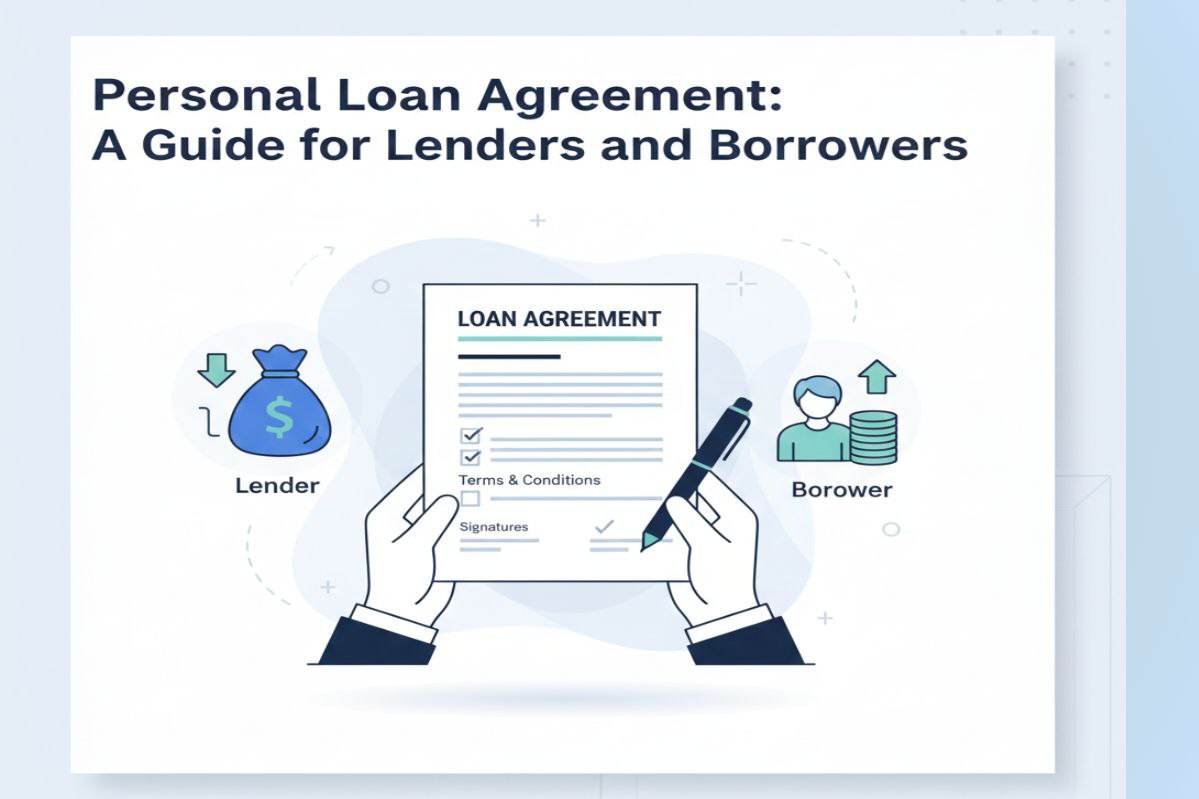
Lending or borrowing money is a fundamental part of personal and business relationships in India. Whether it's a "hand loan" to a friend in need, seed money for a family member's startup, or a formal business credit line, these transactions are built on trust. However, without a formal, written agreement, that trust can easily be broken, leading to strained relationships, financial loss, and messy disputes. A well-drafted loan agreement is not a sign of mistrust; it is the cornerstone of a transparent, secure, and respectful financial arrangement.
Imagine lending a significant sum to a friend for their business, only to have them deny the terms or delay repayment indefinitely. Without a contract, your recourse is limited and proving the loan in court becomes a difficult task. Conversely, as a borrower, a verbal agreement leaves you vulnerable to arbitrary changes in interest rates or repayment schedules. A formal loan agreement prevents these ambiguities by creating a clear, binding roadmap that protects both parties. It transforms a casual promise into an enforceable commitment, ensuring that everyone is on the same page from the start.
This comprehensive guide is designed to demystify the loan agreement process in India for 2026. We will walk you through its official standing under the Indian Contract Act, break down the critical clauses every agreement must contain, and explain the crucial steps of execution, including stamp duty and notarization. From understanding the difference between secured and unsecured loans to calculating interest and defining default consequences, this article will provide you with the knowledge to draft and enter into loan agreements with confidence. Whether you are a lender seeking to protect your investment or a borrower ensuring fair terms, this guide will equip you to navigate the process smoothly and securely.
What is a Loan Agreement and Why is it Essential in India?
A loan agreement is a formal contract between a lender (the person or entity giving money) and a borrower (the person or entity receiving money). It outlines all the terms and conditions of the loan, including the amount, interest rate, repayment schedule, and consequences of default. In India, while oral agreements are recognized by law, they are extremely difficult to enforce. A written loan agreement, governed by the Indian Contract Act, 1872, serves as the primary piece of evidence outlining the obligations of both parties.
Its importance cannot be overstated. For the lender, it is the document that makes the debt officially recoverable. For the borrower, it protects them from unfair terms and provides a clear record of their repayment obligations. It professionalizes the transaction, moving it from a realm of informal understanding to one of official clarity.
Key Benefits of a Written Loan Agreement:
- Clarity and Prevention of Disputes: It leaves no room for ambiguity regarding the loan terms, preventing future disagreements.
- Official Enforceability: A properly executed agreement is a powerful tool in court if the borrower defaults.
- Protection for Both Parties: It protects the lender's capital and the borrower's rights.
- Financial Record: It serves as an important document for accounting, tax purposes, and financial planning.
In essence, a loan agreement is the foundation of a secure lending relationship, ensuring that the transaction is conducted fairly and transparently.
Types of Loan Agreements in India
Loan agreements can be categorized based on the relationship between the parties and the nature of the security provided.
1. Personal or "Hand" Loans
These are informal loans between friends, family members, or colleagues. While often based on trust, a simple written agreement is highly recommended to avoid straining personal relationships over financial misunderstandings.
2. Business Loans
These are more formal loans provided for commercial purposes, such as starting a business, purchasing equipment, or managing working capital. They often involve more detailed clauses related to the use of funds and business performance.
3. Secured Loans
In a secured loan, the borrower pledges an asset (like property, gold, or a vehicle) as collateral. If the borrower defaults, the lender has the right to seize and sell the collateral to recover the loan amount. Home loans and vehicle loans are common examples.
4. Unsecured Loans
An unsecured loan is not backed by any collateral. The lender provides the money based solely on the borrower's creditworthiness and promise to repay. Personal loans and credit card debt fall into this category. These loans typically carry a higher interest rate due to the increased risk for the lender.
Anatomy of a Strong Loan Agreement: Essential Clauses to Include
A comprehensive loan agreement is structured to cover all possible contingencies, ensuring a smooth process from disbursement to final repayment. Here are the critical clauses that every agreement should contain.
1. Details of the Parties
This opening section must clearly identify the lender and the borrower. It should include their full official names, father's/husband's names, permanent residential addresses, and PAN/Aadhaar numbers. This precision is vital for official identification and communication.
2. The Loan Amount and Disbursement
The agreement must explicitly state the principal loan amount in both figures and words to prevent any ambiguity or tampering. It should also mention the date of disbursement and the method of transfer (e.g., cheque, bank transfer, or cash), creating a clear record of the transaction.
3. Interest Rate and Calculation
If the loan carries interest, the rate must be clearly specified (e.g., "12% per annum"). The agreement should also define how the interest will be calculated—whether on a simple or compounding basis. For interest-free loans, the clause should explicitly state "zero interest" or "interest-free" to avoid any future claims based on prevailing market rates.
4. Repayment Schedule
This is one of the most critical sections. It defines how and when the loan will be repaid. Common repayment structures include:
- Lump-Sum Repayment: The entire principal and interest are paid on a single, specified due date.
- Equated Monthly Installments (EMIs): The loan is repaid in fixed monthly payments over a set tenure.
- Interest-Only Payments: The borrower pays only the interest periodically, with the principal due at the end of the term.
The agreement should detail the due date of each payment and the mode of payment (e.g., post-dated cheques, bank transfer).
5. Default Clause and Penalties
This clause outlines the consequences if the borrower fails to make payments on time. It can include provisions for a penalty interest rate on the overdue amount, the right for the lender to demand immediate repayment of the entire outstanding loan, and the initiation of official recovery proceedings. A clear default clause acts as a strong deterrent against non-payment.
6. Security or Collateral (for Secured Loans)
If the loan is secured, this section must provide a detailed description of the asset being pledged as collateral. For a property, this would include its full address, survey number, and boundaries. For a vehicle, it would include the registration number and engine/chassis numbers. This clause gives the lender the official right to take possession of the asset in case of default.
7. Prepayment Clause
This clause specifies whether the borrower is allowed to repay the loan before the scheduled due date. It should also state if any prepayment penalty will be charged. The Reserve Bank of India (RBI) has guidelines that often prohibit prepayment penalties on certain types of floating-rate loans, but it's important to clarify this in the agreement.
8. Governing Law and Dispute Resolution
This section specifies that the agreement will be governed by the laws of India. It also defines the jurisdiction (the city or state) where any official disputes will be addressed. Including an arbitration clause can provide a faster and less expensive alternative to traditional court proceedings for resolving disagreements.
9. Witness and Signatures
A loan agreement must be signed by both the lender and the borrower. It is also a mandatory requirement under Indian law to have at least two independent witnesses who sign the document, attesting that they saw both parties sign it in their presence. The witnesses should also write their full names and addresses.
The Execution Process: Stamp Duty and Notarization
To make a loan agreement officially enforceable, it must be properly executed. This involves printing it on non-judicial stamp paper of the appropriate value. The stamp duty varies significantly from state to state and depends on the loan amount. For example, in Maharashtra, the stamp duty can be 0.1% to 0.2% of the loan amount, while in Delhi, it might be a fixed amount on a promissory note attached to the agreement.
You can check the specific stamp duty requirements for your state on the official website of the state's registration department or on portals like the Stock Holding Corporation of India (SHCIL). While notarization is not always mandatory, it is highly recommended, as it adds an extra layer of authenticity to the document. The notary will verify the identity of the signatories and attest the document, which can be crucial in court.
Conclusion: Your Blueprint for a Secure Financial Transaction
A loan agreement is an indispensable tool for anyone lending or borrowing money in India. It is not about mistrust; it is about creating a clear, professional, and secure framework that protects both parties and preserves their relationship. By ensuring all essential clauses are included and the document is properly executed on stamp paper, you create a binding contract that is enforceable under Indian law.
Whether it’s a small personal loan or a significant business investment, a well-drafted agreement provides peace of mind and a clear path for recourse if things go wrong. Never rely on verbal promises alone. Use a formal agreement to build your financial relationships on a foundation of clarity and security. For other formal agreements, explore our library of templates, including a Rent Agreement or a Partnership Agreement for your business needs.